The origins of perfumery are lost in the midst of antiquity. The beginnings were from the Middle East (Egypt) and the Far East (India and China). Perfumes were mainly used in prayers to please the Gods and many different fragrances were formulated for use in prayers to the many Gods of that age. It was believed that rising fragrant smoke acted as a bridge to lift human prayers directly to the Heavens. Indeed, the term per fumum, the original of the word ‘perfume’ is a Latin phrase meaning “through smoke”. The art and science of perfumery went to the West through Spain with the Arab conquests and through Venice due to its trade link with the Far East. In Indian mythology, fragrance often marked the presence of the divine – it wasn’t just noticed, it was revered.
The diversity of the natural products used in perfumery is very considerable. From remote antiquity until the end of the nineteenth century, the perfumery industry used only natural products for its perfumes. The development of organic chemistry by French and German scientists created an important dye industry and then the synthetic odorants industry.
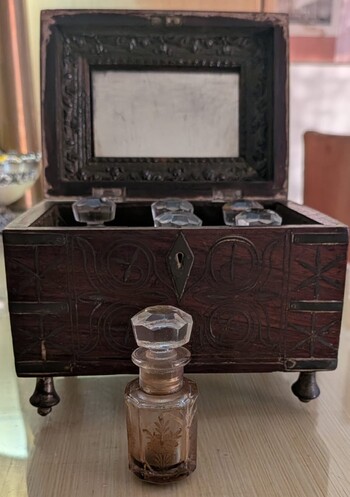
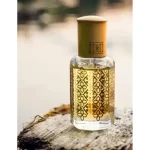
Though the perfume industry has evolved from its original form where the perfumes used were in their actual form of essential oils, attars, to the alcoholic form, the trade of attars still continues on a large scale. In fact, the attar industry is undergoing a revolutionary trend of providing the consumer of modern fragrances with age-old natural and synthetic-but-near-to-natural components. The beauty of attar is that its fragrance is very long lasting. I still have a beautifully engraved wooden container belonging to my mother where the attar is fragrant even after many decades. It is no surprise then that when tombs of Egyptian priests and their Pharoahs were opened by archaeologists, the perfumes with which they had been entombed were discovered to have retained their original, sweet smells.
Consumers complain about attars being oily but if used properly, they do give excellent olfactory effect. Not forgetting their use is also very economical. Traditional attar is completely alcohol-free and is made by distilling botanical ingredients like flowers, herbs, spices and wood.
Attars are broadly classified based on their perceived effect on the body. “Warm” attars, such as musk, amber and kesar (saffron), are used in winter, as they are believed to increase body temperature. Likewise, “cool” attars, such as rose, jasmine, khus (vetiver), kewra (screw pine) and mogra (jasmine), are used in summer for their perceived cooling effect on the body. Ayurveda, India’s ancient system of medicine, recognises the therapeutic power of scent on emotional well-being, as does aromatherapy.
Perfume continues to be more than just something that smells good.


Loving these Aunty, you’re a wealth of information!
…engaging,ingrossing-very easy read..loved it..
Very nice and nostalgic. Would love to see/smell the wooden container on our next trip!